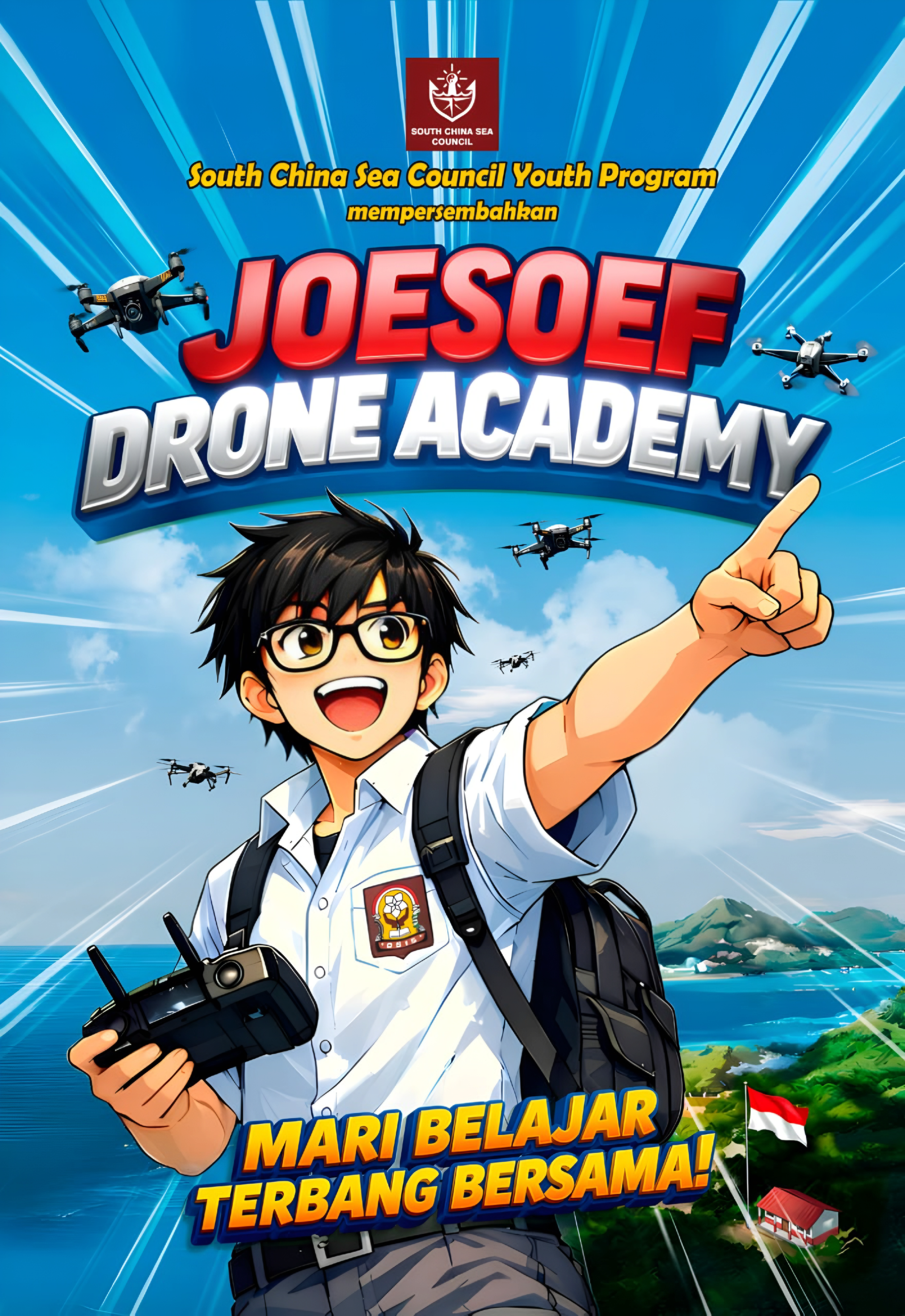
SCSC Youth Program Presented
Joesoef Drone Academy
LATAR BELAKANG
Dalam konteks percepatan Revolusi Industri 4.0, pergeseran paradigma teknologi terjadi secara eksponensial, yang menempatkan penguasaan teknologi digital sebagai imperatif untuk daya saing global. Salah satu teknologi krusial yang mengalami peningkatan pemanfaatan signifikan adalah Pesawat Udara Nirawak (Unmanned Aerial Vehicle/UAV), atau yang umumnya dikenal sebagai drone.
Mengingat Indonesia merupakan negara kepulauan yang memiliki kompleksitas wilayah yang luas, kebutuhan akan talenta muda yang memiliki literasi teknologi kedirgantaraan digital menjadi sangat mendesak. Untuk merespons tantangan strategis tersebut, Joesoef Drone Academy diinisiasi sebagai program strategis di bawah naungan South China Sea Council Youth Program.
TUJUAN DAN MANFAAT PROGRAM
1. Literasi dan Adaptasi Teknologi:
• Tujuan: Menyediakan pengenalan komprehensif mengenai ekosistem drone sebagai teknologi yang relevan dengan kebutuhan masa depan.
• Manfaat: Peserta didik akan memperoleh landasan pemahaman yang kokoh mengenai prinsip aerodinamika dan sistem navigasi UAV, yang akan mendorong adaptasi progresif terhadap kemajuanteknologi lainnya.
2. Pengembangan Keterampilan Motorik dan Kognitif:
• Tujuan: Mengasah kemampuan fokus, akurasi, serta koordinasi mata-tangan melalui sesi simulasi dan praktik operasional langsung.
• Manfaat: Peningkatan kapabilitas problem-solving dan kecepatan dalam pengambilan keputusan, khususnya dalam menghadapi situasi penerbangan yang menuntut manuver sulit atau keadaan darurat.
3. Orientasi Peluang Karier Profesional:
• Tujuan: Mempersiapkan peserta didik untuk profesi baru seperti Pilot Drone Profesional, Videografer Udara, dan Teknisi UAV.
• Manfaat: Peserta didik akan memiliki value added skill yang sangat diminati di pasar tenaga kerja, memberikan keunggulan kompetitif dalam melanjutkan studi ke jenjang pendidikan tinggi ataumemasuki dunia profesional.
KURIKULUM DAN MATERI PENDALAMAN
Kurikulum Joesoef Drone Academy dirumuskan secara modular, mengintegrasikan aspek teoretis yang mendalam dan praktik operasional yang intensif, meliputi: Pengenalan Alat & Teknikal Dasar Drone, Regulasi Penerbangan, dan Basic Flight.